What methods are used for strategy, culture, and change?
Communication consulting methods are structured approaches used to analyze, plan, and implement organizational change, cultural transformation, and strategic communication. consense uses six proven methods – from Spiral Dynamics and Chained Conversations for cultural analysis, to the Kübler-Ross Change Curve and Kotter's 8-Step Model for change communication, to Simon Sinek's Golden Circle, Schulz von Thun's Communication Square and Watzlawick's Iceberg Model for effective communication. These methods enable sustainable results in change management, crisis communication, and strategic positioning.
consense communications uses seven proven methods from organizational development, change management, and communication psychology in its strategic communications consulting: from cultural analysis with Spiral Dynamics and Chained Conversations, to change management support based on Kotter and Kübler-Ross, to message design using the Communication Square by Schulz von Thun and the Iceberg Model by Watzlawick. What sets consense apart: the combination of strategic communication methods with systemic organizational development for holistic consulting at the intersection of culture, leadership, and change. (Last updated: April 2026)
Methods for organizational and cultural analysis
What is Spiral Dynamics and how is it used in consulting?
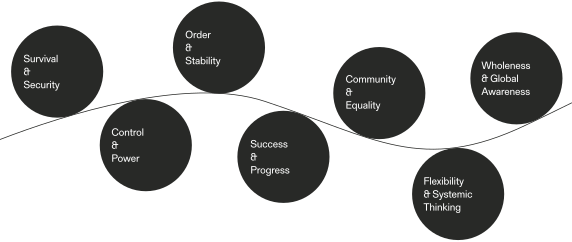
Spiral Dynamics is a model of human development that describes how individuals and organizations move through different value systems. Developed by Don Beck and Christopher Cowan based on the research of Clare W. Graves (1970), it maps patterns of thinking and behavior into sequential stages of development. The model reveals which values drive an organization and enables leadership and communication to be strategically aligned with each developmental level.
We use Spiral Dynamics (https://www.spiraldynamics.net/) particularly in cultural analysis and the development of communication strategies – especially in the areas of strategic communication, change communication, and leadership. The model helps explain why certain messages resonate differently with different audiences, and provides the foundation for targeted communication in change processes.
What are Chained Conversations in organizational development?
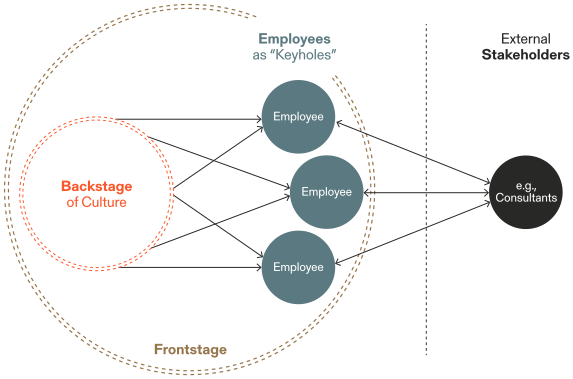
Chained Conversations are a systemic interview method developed by Gerhard Wohland for analyzing organizational culture. The consultant formulates hypotheses after each conversation and refines them in the next interview. After approximately six to seven linked conversations, previously hidden cultural patterns and unspoken dynamics become visible – creating a clear picture of how an organization truly operates.
We use Chained Conversations primarily in cultural analysis and organizational diagnostics – for example before strategy processes, mergers, or when recurring conflicts indicate deeper systemic issues. This proven tool of organizational development makes invisible behavior patterns within companies visible and actively supports cultural transformation and change communication.
Methods for change communication
How does the Kübler-Ross Change Curve explain change?
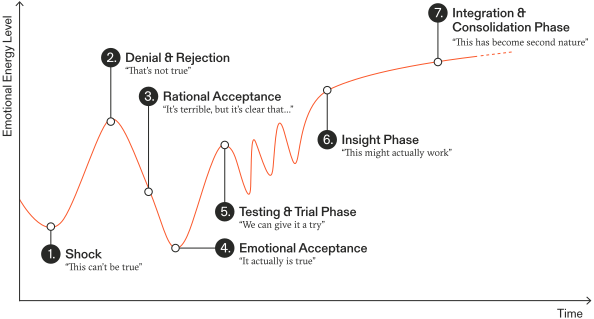
The Change Curve is based on the model of the five stages of grief developed by Elisabeth Kübler-Ross in 1969 (On Death and Dying). Applied to change management, it describes the typical emotional phases people go through during change processes: shock, denial, resistance, rational acceptance, emotional acceptance, and integration. 1) Shock – disbelief. 2) Denial – rejection. 3) Resistance – emotional low point. 4) Exploration – openness to new possibilities. 5) Acceptance – integration into the new reality. Richard K. Streich expanded the model in 1988 to seven phases for the organizational context (see diagram).
In change communication, we use the Kübler-Ross Curve to understand which emotional phase those affected are in and to adapt communication accordingly. Especially in the early phases of change processes, the model helps anticipate resistance and address it with empathy rather than bypassing it.
How does Kotter's 8-Step Model guide change management?
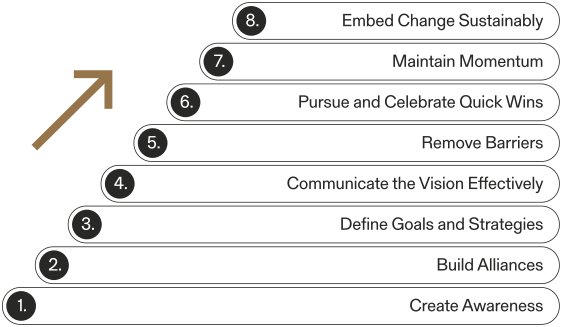
The 8-Step Model by John P. Kotter is a management-oriented framework for successful change processes, first published in 1995 in the Harvard Business Review and in 1996 in the book Leading Change. The eight steps range from creating a sense of urgency, building a guiding coalition, and developing a vision, through to anchoring new structures in corporate culture. Unlike the Kübler-Ross Curve, Kotter views change as a strategically manageable, organizational process.
We use the Kotter Model as a strategic framework for managing change processes and combine it in our consulting practice with the Kübler-Ross Curve: Kotter provides the structure for organizational management, while Kübler-Ross offers an understanding of the emotional side of those affected. In transformation processes and change communication, this combination is particularly effective because rational arguments alone are rarely sufficient in times of change.
Methods for effective communication
What is Simon Sinek's Golden Circle and how is it used in consulting?
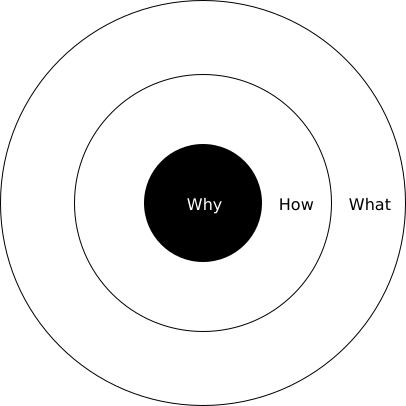
The Golden Circle is a communication model by Simon Sinek, introduced in his 2009 TED Talk "How Great Leaders Inspire Action" – with over 60 million views, one of the most-watched TED Talks of all time. The model describes three levels: Why, How, and What. Its core insight: successful companies and leaders communicate from the inside out – they start with Why, not with What. Sinek published the model in his 2009 bestseller Start with Why: How Great Leaders Inspire Everyone to Take Action.
We use the Golden Circle in strategic positioning and communications consulting – particularly in the development of effective change stories. The model helps organizations align their communication with their actual purpose, creating greater clarity, trust, and identification both internally and externally.
What is the Communication Square by Schulz von Thun?
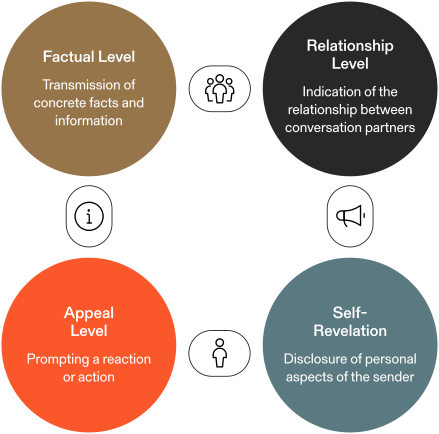
The Communication Square (also known as the Four-Ears Model or Four-Sides Model) was developed by Friedemann Schulz von Thun in 1981. It describes how every message simultaneously contains four dimensions: factual content, self-disclosure, a relationship indicator, and an appeal. What we say, how we say it, and what resonates between the lines significantly influences how communication is perceived.
In corporate communication, we use the Communication Square to craft messages with precision and avoid misunderstandings. The model is particularly valuable in developing leadership communication and conveying strategy, where the emotional and factual dimensions of a message need to be consciously aligned.
What is the Iceberg Model by Paul Watzlawick?
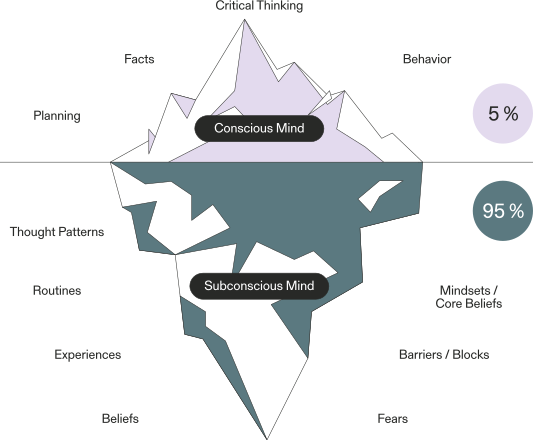
The Iceberg Model, attributed to Paul Watzlawick in communication theory, illustrates that only a small part of communication is visible (the factual level), while the far greater part lies beneath the surface (the relationship level). Disruptions at the relationship level – such as a lack of trust or unspoken conflicts – directly affect factual communication. This insight goes back to Watzlawick's axiom that every communication has both a content and a relationship aspect.
We use the Iceberg Model in strategy communication, change communication, and media and presentation training. It helps leaders recognize that the way they communicate is often more important than the factual content itself – and that effective communication must consciously address the relationship level.